
Car Care · Ceramic Coating
How to Choose Ceramic Coating for Your Vehicle – A Practical
Learn how to choose ceramic coating by comparing paint prep, chemistry, installer process, PPF, cost factors, and maintenance for Kitchener driving.
Last updated: October 2026
Key takeaway:Choose ceramic coating by matching the coating system, paint preparation, installer process, and maintenance requirements to your vehicle’s condition and daily use. For Kitchener drivers, the right choice is usually the one that offers thorough decontamination and polishing, clear curing instructions, and a realistic plan for winter road film - not simply the product with the most impressive label.
By Harmanpreet Singh, Techno Car Studio
Last updated: October 2026
In this guide
- What ceramic coating does
- Assess your vehicle and goals
- Choose a coating step by step
- Compare ceramic coating with other protection
- Evaluate the installer and written coverage
- Maintain a coated vehicle
- Frequently asked questions
What ceramic coating does - and what it cannot do
Ceramic coating is a liquid protective product that cures into a thin, bonded layer over a vehicle’s paint or another compatible surface. Professional systems are commonly based on silica chemistry, including SiO2 or SiC formulations, and are designed to improve gloss, water behavior, and resistance to many environmental contaminants.
The coating is best understood as a protective top layer, not a new paint finish. It can make washing easier and help the corrected surface resist chemical staining, ultraviolet exposure, and road grime. It does not repair deep scratches, remove stone chips, stop every water spot, or make paint immune to careless washing.
Benefits that matter in everyday driving
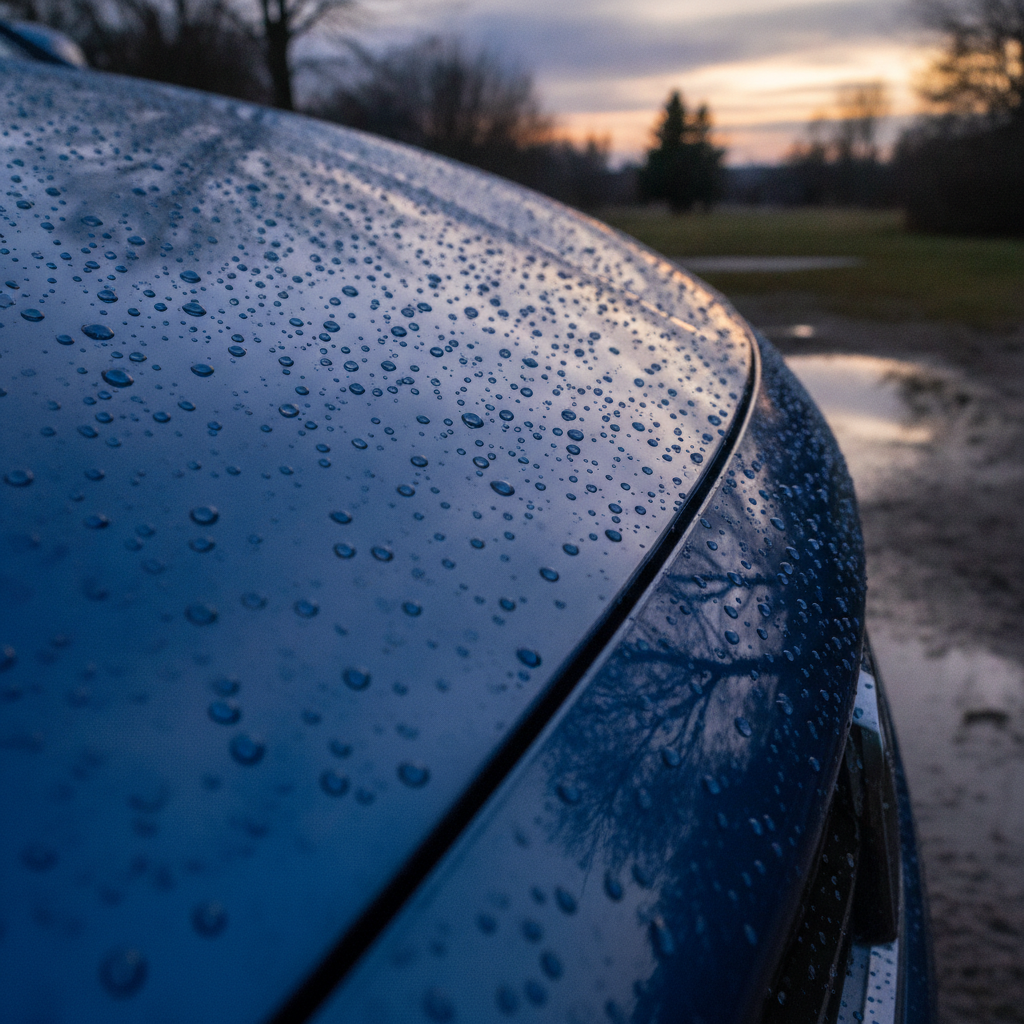
- Easier cleaning: A properly maintained coated surface can release dirt and road film more readily than unprotected paint.
- More consistent gloss: The coating preserves the finish created during polishing, provided the surface is washed correctly.
- Environmental resistance: The layer helps protect against common chemical and weather-related contamination, although prompt cleaning is still important.
- Lower correction frequency: Gentle washing and better contamination control can reduce the need for aggressive polishing.
These benefits are particularly relevant to vehicles used throughout Kitchener. Commuting, outdoor parking, rain, summer sun, and winter road film all create different demands, so a coating should be selected around use rather than treated as a universal upgrade.
Limitations to understand before booking
- A coating does not replace paint protection film where stone chips and direct impacts are the primary concern.
- A coating does not hide defects that remain visible beneath it; polishing or repair must happen first.
- A coating does not eliminate washing. Dirt, salt, bird contamination, and mineral deposits still need to be removed safely.
- A hardness claim is not the same as scratch-proof performance. Real-world abrasion depends heavily on washing technique and the contaminant involved.
Assess your vehicle, driving, and maintenance goals
The most useful answer to “how to choose ceramic coating” begins before anyone discusses brands or layers. First establish what condition the paint is in, where the vehicle is exposed, and how much maintenance you are realistically prepared to perform. This prevents paying for a system whose benefits do not match your routine.
Inspect the paint condition
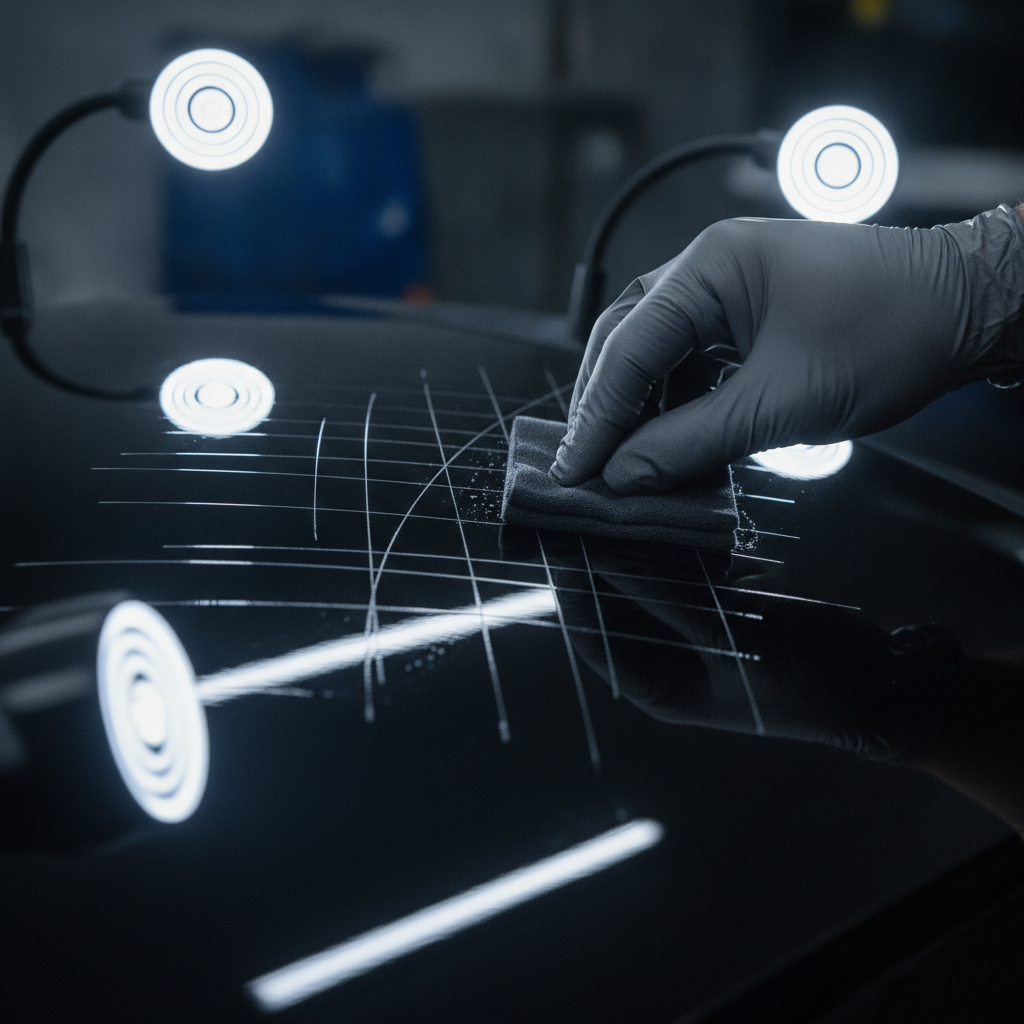
Examine the vehicle in strong, even light and record what you see. Look for wash swirls, oxidation, haze, water spots, bird etching, scratches, chips, and areas that have been repainted. A vehicle that is new to you may still need decontamination and polishing because transport, dealership washing, or previous ownership can leave defects behind.
- Run clean fingertips over the paint after washing. Roughness can indicate bonded iron, tar, or other contamination.
- Check horizontal panels carefully because the hood and roof often collect more environmental residue.
- Identify matte trim, textured plastics, badges, glass, and wheels that may need separate products or masking.
- Tell the installer about recent bodywork. Refinished panels may require an appropriate cure period and a different assessment.
Documenting the condition with photographs is useful because it separates pre-existing defects from issues noticed after application. It also helps an installer explain whether the recommended work is a wash, chemical decontamination, one-step polish, or more extensive correction.
Match protection to how you drive
A garage-kept weekend vehicle and an outdoor-parked commuter do not need the same plan. Consider kilometres driven, highway exposure, parking conditions, access to washing facilities, and whether the vehicle regularly carries children, pets, tools, or outdoor equipment. A coating that is easy to maintain may be more valuable than a technically advanced system that requires a routine you will not follow.
- Daily commuting: Prioritize chemical resistance, easy cleaning, and a maintenance plan that fits frequent road exposure.
- Highway driving: Consider whether impact zones need paint protection film in addition to ceramic coating.
- Outdoor parking: Place greater emphasis on UV exposure, prompt contamination removal, and regular washing.
- Show or enthusiast use: A high-gloss finish and careful correction may matter more than minimizing every service visit.
- Infrequent washing: Choose a straightforward care plan and be honest about whether you can perform seasonal decontamination.
Decide what success means
Write down your main objective before comparing packages. You may want deeper gloss, faster washing, better resistance to road film, easier wheel cleaning, or a balanced improvement without extensive correction. Ranking these goals makes it easier to reject unnecessary add-ons and select protection that solves the problem you actually have.
How to choose ceramic coating step by step
Use the following process to compare coating options consistently. Ask the same questions of every studio, request the work in writing, and judge the complete process rather than the bottle alone.
1. Define the preparation required
Preparation is often the most important part of the result because the coating preserves the surface it is applied to. A suitable process may include a safe wash, chemical iron removal, tar removal, mechanical clay where appropriate, and machine polishing. The exact combination should follow an inspection rather than an automatic package promise.
Ask what happens if the inspection finds water spots, heavy swirls, fresh paint, or deeper scratches. Confirm whether correction is included, optional, or excluded. If a quote says only “ceramic coating” without describing preparation, you do not yet know what outcome you are comparing.
2. Compare chemistry by use case
Product chemistry can influence gloss, slickness, chemical resistance, hardness, application behavior, and maintenance. Those differences matter, but they should be discussed in practical terms instead of reduced to a single hardness number.
- SiO2-focused systems: Often selected for gloss, slick feel, and strong water-repellent behavior.
- SiC-focused systems: May be chosen when hardness, chemical resistance, and resilience are higher priorities.
- System toppers: Some manufacturers specify compatible maintenance products that refresh water behavior without replacing the base coating.
Do not assume that more layers automatically mean a better result. Layering may increase preparation and application complexity, while the visible benefit depends on the product system, installer technique, curing conditions, and maintenance afterward.
3. Verify the application environment
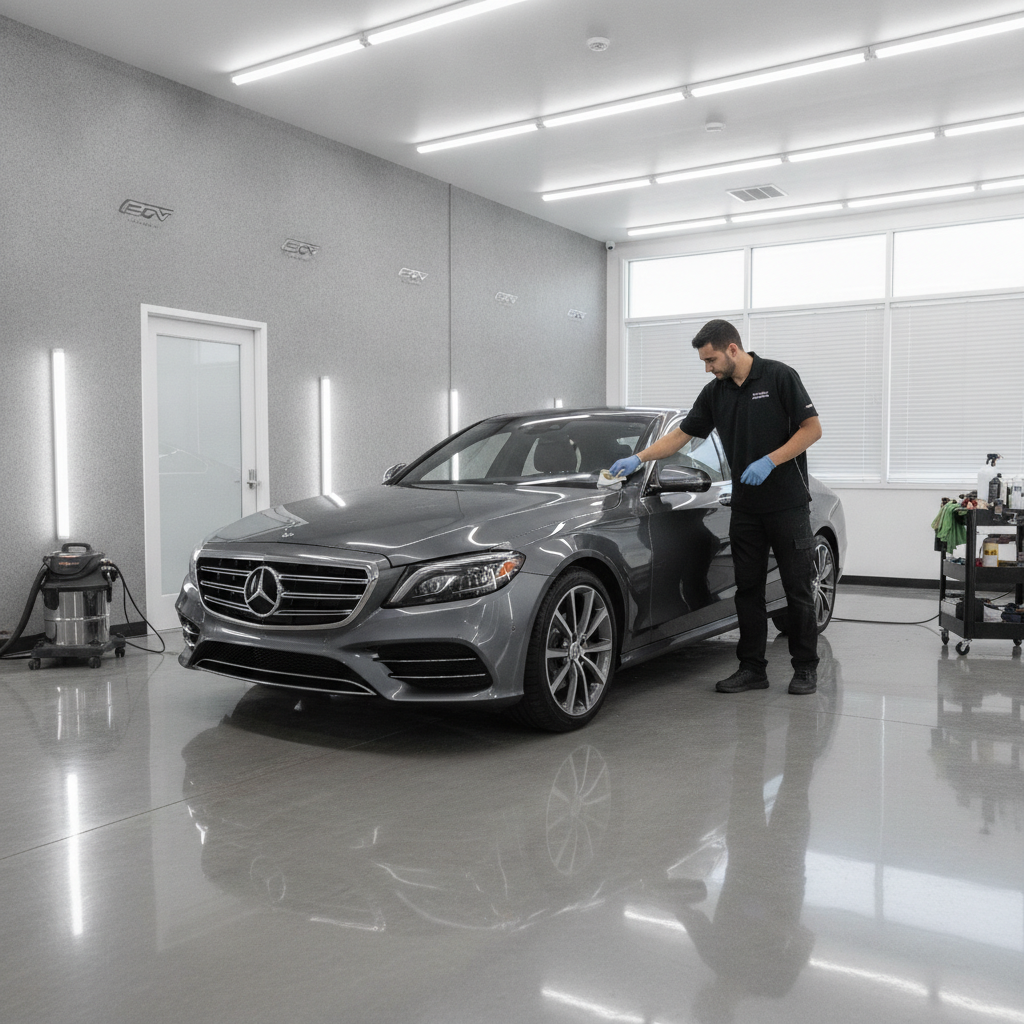
A professional application needs a clean, controlled area where the installer can see the paint and manage the product’s flash and leveling behavior. Ask whether the studio uses strong inspection lighting, controls dust, and provides an appropriate cure environment. Temperature and humidity can affect working time, so the installer should explain how those conditions are managed.
Ask how high spots are checked before the vehicle leaves the bay. A high spot is excess or uneven product that has not been leveled correctly and may appear as a dark streak or patch after curing. Careful inspection before delivery is more meaningful than a marketing claim about the coating’s durability.
4. Get the cure and aftercare instructions
Before booking, ask exactly how long the vehicle must remain dry, when it may be washed, and what to do if it encounters rain or contamination during the initial cure period. The correct instructions are product-specific, so a studio should provide guidance for the system it is applying rather than a vague universal rule.
Also request the recommended soap, drying method, topper, and decontamination schedule. A plan that says “wash normally” is incomplete. You should know which products are compatible and which habits could reduce the coating’s water behavior or create marring.
5. Decide whether to add targeted protection
Ceramic coating and paint protection film serve different purposes. If the main concern is chips from highway driving, film may be appropriate on the bumper, hood edge, mirrors, or other impact zones. Ceramic can then be applied to compatible painted areas to improve gloss and cleanup.
This hybrid approach is not automatically necessary. Choose it when the vehicle’s exposure and budget justify the additional protection. Otherwise, a well-prepared ceramic application with a consistent wash routine may be the more sensible plan.
Ceramic coating compared with wax, sealant, and PPF
Each protection type makes a different trade-off. The best choice depends on whether you want a short-term appearance refresh, easier maintenance, chemical resistance, or a physical barrier against impacts.
| Protection | Primary benefit | Best suited to | Important limitation |
|---|---|---|---|
| Wax | Warm appearance and quick water repellency | Owners who enjoy frequent appearance refreshes | Requires regular reapplication and offers limited impact protection |
| Paint sealant | Longer-lasting surface protection than many waxes | Owners seeking simpler seasonal upkeep | Does not provide a physical barrier against stone chips |
| Ceramic coating | Gloss, hydrophobic behavior, and chemical or UV resistance | Daily drivers wanting easier, gentler washing | Needs proper preparation and compatible maintenance |
| Paint protection film | Physical resistance against chips and some impacts | Highway drivers or vulnerable painted panels | Costs and appearance depend on coverage, material, and installation |
Choosing ceramic coating does not mean rejecting every other option. A vehicle may use film on high-impact areas, ceramic on remaining paint, and dedicated products on wheels or glass. The combination should be based on exposure rather than a desire to add every available service.
How to evaluate an installer and written coverage
The installer’s process has more influence on the finished appearance than a product name viewed in isolation. Compare studios by asking what they inspect, how they prepare paint, where they apply the coating, how they manage curing, and what support is available afterward.
Questions worth asking before booking
- Will the vehicle receive chemical and mechanical decontamination where needed?
- Is machine polishing included, and how is the correction level determined?
- Which coating system will be applied, and what surfaces is it designed for?
- How are lighting, dust, temperature, and humidity handled during application?
- How are high spots checked before delivery?
- What is the initial cure period and first-wash instruction?
- Which soap and maintenance products are compatible?
- What does any written coverage include, exclude, and require from the owner?
Warranty language should be treated as a set of conditions, not as a guarantee that the coating will remain unchanged regardless of care. Before purchasing, request the written coverage, maintenance requirements, exclusions, inspection process, and claim procedure. Canadian consumer guidance also recommends keeping documentation such as warranty information and original receipts; review the Office of Consumer Affairs warranty guidance alongside the installer’s terms.
Signs a quote needs clarification
Be cautious when the quote promises a fixed result without inspecting the paint, gives no preparation details, uses durability language without conditions, or treats every vehicle as the same. A low price may reflect a smaller correction scope, fewer included surfaces, a consumer-grade product, or less post-application support; it is not possible to compare fairly until the scope is clear.
Likewise, a higher price is not automatically proof of better work. Ask what additional preparation, coating coverage, inspection time, or aftercare support accounts for the difference. The goal is a transparent scope that matches your vehicle and expectations.
What affects the cost of ceramic coating
There is no useful single price for ceramic coating without knowing the vehicle, paint condition, preparation, coverage, and product system. A sedan with clean, well-maintained paint may require a different amount of labour than an SUV with heavy contamination and several correction stages.
Factors that change the scope
- Vehicle size: Larger vehicles have more painted area and may take longer to wash, polish, coat, and inspect.
- Paint condition: Swirls, oxidation, water spots, and scratches can increase correction time.
- Surface coverage: Paint-only service differs from a package that includes wheels, trim, glass, or film-compatible areas.
- Coating system: Product preparation, application technique, cure requirements, and inspection can vary.
- Aftercare support: Some studios include maintenance guidance or scheduled inspections, while others provide application only.
When comparing quotes, separate preparation from the coating product and ask what happens if the paint needs more correction than expected. This gives you a more reliable decision than choosing the lowest advertised figure. The long-term value comes from a finish that is prepared properly and maintained without aggressive washing.
How to maintain a coated vehicle in Kitchener
Maintenance is part of choosing a coating, not an optional extra after the appointment. A simple routine protects the finish from unnecessary abrasion and helps you notice when bonded contamination or mineral deposits need attention.
Use a gentle wash process
- Rinse thoroughly before touching the paint so loose grit is removed first.
- Use a pH-balanced car soap and a clean, soft wash mitt.
- Work from the cleaner upper panels toward the dirtier lower sections, rinsing the mitt often.
- Dry with a clean, absorbent microfiber towel using light pressure rather than dragging dirt across the surface.
- Follow the coating manufacturer’s instructions for a compatible topper or maintenance spray.
Automatic brushes, household detergents, dirty towels, and aggressive scrubbing can create marring even when a coating is present. If you use a commercial wash, select the least abrasive option available and inspect the finish afterward rather than assuming the coating makes technique irrelevant.
Plan for Kitchener’s seasonal contamination
Winter road film should be rinsed away when practical because salt and grime can accumulate on lower panels, wheel areas, and behind trim. In spring, a careful decontamination can remove bonded particles that ordinary shampoo does not release. During summer, shaded washing and prompt removal of bird contamination or mineral-rich water help reduce etching and spotting.
The right schedule depends on use and weather. An outdoor-parked commuter may need more frequent rinsing than a garage-kept vehicle, while a vehicle driven mainly on dry weekends may need less frequent contact washing. The important principle is consistency: light, safe cleaning is preferable to allowing contamination to build until heavy correction is required.
Recognize common coating problems
- Reduced water behavior: Wash first, then consider contamination and a compatible topper before assuming the coating has failed.
- Water spots: Dry the vehicle promptly and seek product-specific advice before using a strong mineral deposit remover.
- Visible high spots: Contact the installer rather than trying to polish the area immediately.
- New swirls: Review wash media, towel cleanliness, pressure, and whether the vehicle was washed while heavily contaminated.
A practical ceramic coating decision checklist
Before approving a service, confirm each point below. If an answer is unclear, ask for clarification rather than relying on a package name.
- I know which paint defects and contamination are present.
- I understand what washing, decontamination, and polishing are included.
- I have identified whether my priority is gloss, easy cleaning, chemical resistance, or impact protection.
- I know which coating chemistry and surfaces are being proposed.
- I have received the initial cure and first-wash instructions.
- I know which soaps, towels, toppers, and decontamination products are compatible.
- I have asked whether high-impact areas would benefit from PPF instead of, or alongside, ceramic coating.
- I have the written coverage terms, exclusions, maintenance conditions, and claim process.
- The vehicle’s size and paint condition are reflected in the scope of work.
- The plan is realistic for my parking, driving, washing access, and seasonal conditions.
This checklist keeps the decision focused on outcomes. It also makes conversations with a professional studio more productive because you can discuss the vehicle’s actual needs rather than compare marketing labels.
Frequently asked questions
Does ceramic coating hide scratches and swirls?
No. Ceramic coating preserves the surface underneath it, so visible swirls, haze, and scratches should be assessed and corrected where appropriate before application. Deep damage may require repair or may be better addressed with targeted paint protection film on exposed areas.
Is SiO2 or SiC ceramic coating better?
Neither is automatically better for every vehicle. SiO2-focused systems are often selected for gloss and slickness, while SiC-focused systems may suit owners who prioritize hardness and chemical resistance. The preparation, application, maintenance, and exposure of the vehicle matter as much as the chemistry label.
Can ceramic coating replace paint protection film?
No. Ceramic coating helps with gloss, cleaning, and chemical or UV exposure, while PPF provides a physical barrier against many chips and impacts. Drivers who spend substantial time on highways may use film on vulnerable panels and ceramic on the remaining compatible surfaces.
How do you wash a car with ceramic coating?
Rinse away loose grit, use pH-balanced soap and a clean soft mitt, and dry with clean microfiber towels using light pressure. Avoid abrasive brushes and harsh household detergents. Follow the coating system’s instructions for compatible toppers and seasonal decontamination.
How soon can a coated vehicle be washed?
Follow the installer’s product-specific cure instructions because the initial period can depend on the system and environment. Ask what to do if rain, dust, or bird contamination occurs before the coating has cured. Do not substitute a generic timeline for the written guidance provided for the coating applied to your vehicle.
Get a coating recommendation for your vehicle
Techno Car Studio can inspect your vehicle’s paint, discuss how you drive and maintain it, and explain a practical ceramic coating plan for Kitchener conditions. Contact Techno Car Studio for a vehicle-specific assessment before choosing a product or package.